
Motor Pool Management Software Built for Public Sector Fleets
The best vehicle sharing software automates reservations, controls vehicle access, and captures the utilization data needed to reduce fleet size without reducing service. For government agencies, universities, and utilities, FleetCommander by Agile Fleet is purpose-built for shared fleet operations — combining motor pool management, 24/7 kiosk key control, driver compliance enforcement, and utilization reporting in a single FedRAMP-authorized platform. Organizations using FleetCommander have eliminated 20–35% of fleet vehicles while improving driver access and satisfaction.
On this page:
What Is Vehicle Sharing Software?
Quick answer
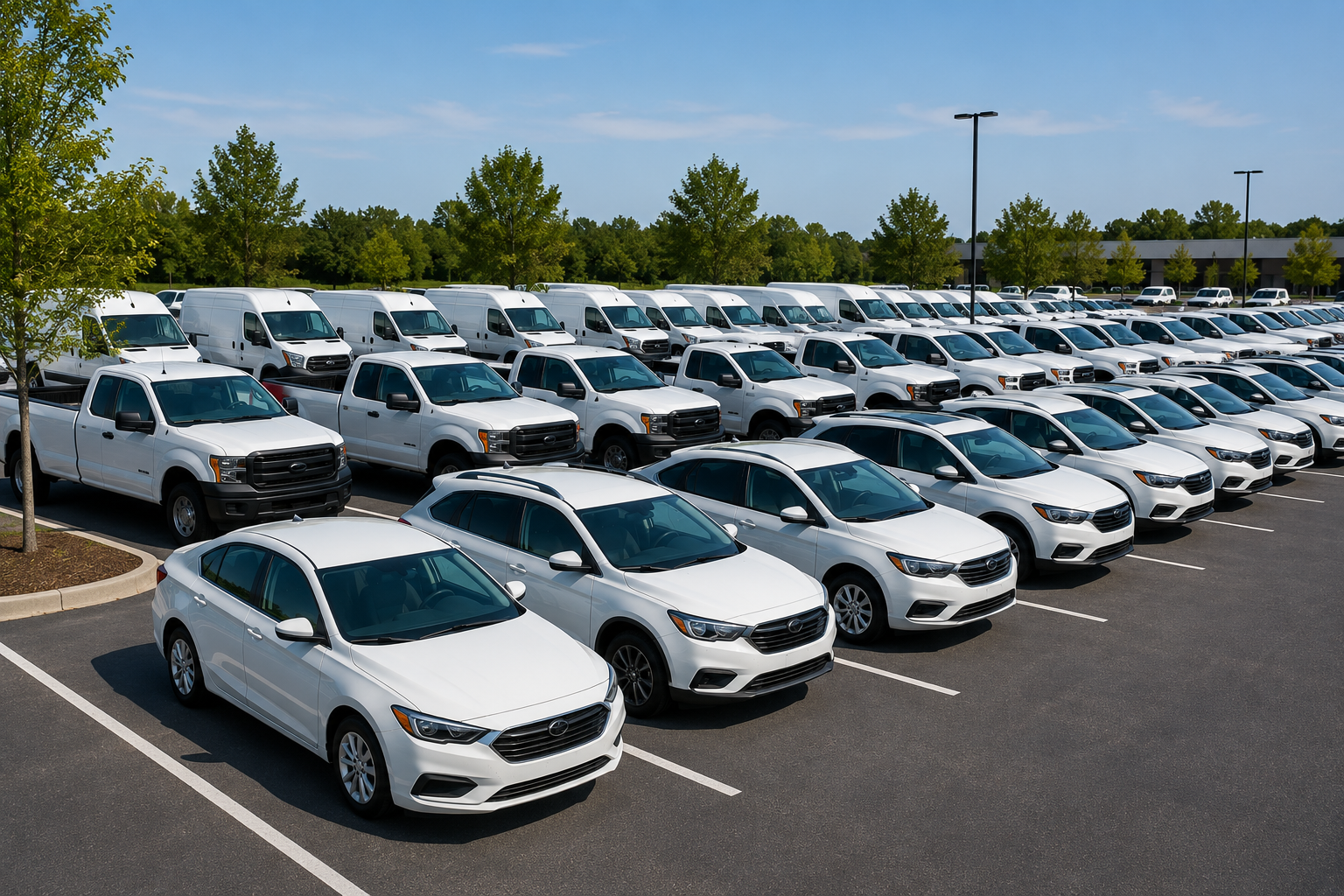
Vehicle sharing software — also called motor pool management software — is a platform that enables multiple drivers to share a common fleet of vehicles through online reservations, automated access control, and usage tracking. Rather than assigning one vehicle per employee, shared fleets maximize each vehicle's use, reducing the total number of vehicles an organization needs to own and maintain.
A motor pool is a group of vehicles whose use is shared on a short-term basis by the personnel of an organization. The goal of an efficiently run, self-service motor pool is to ensure the organization can achieve its mission in the most cost-effective and efficient way.
Unfortunately, many organizations attempt to manage motor pools manually — using spreadsheets, email, and in-person key handoffs. This method results in time-consuming processes, excessive staff involvement, lack of visibility into fleet usage, and expensive carrying costs with no data to support fleet composition decisions. Vehicle sharing software solves each of these problems in a single platform.
Shared vehicles vs. assigned vehicles: the cost difference
What to Look for in Vehicle Sharing Software
Not all vehicle sharing platforms are built for the same use case. Consumer car-sharing apps are designed for individuals renting vehicles on demand. Enterprise and public sector fleets require a different capability set — one that handles organizational policy enforcement, audit readiness, multi-site operations, and procurement compliance.
Key capability checklist
Online reservation system
Drivers book vehicles online in seconds — no emails, calls, or spreadsheets. Access should be limited to vehicles drivers are licensed and certified to operate, enforced automatically at booking.
24/7 key control and kiosk access
Self-service kiosks release keys only for authorized, reserved trips — enabling round-the-clock access without staff involvement. Eliminates the cost and inconvenience of limited office hours.
Utilization reporting and analytics
60+ built-in reports should surface underused assets automatically. This is the data that enables right-sizing decisions — without it, fleet managers are guessing about which vehicles to keep or cut.
Automated dispatching
Automated dispatching eliminates wait times and removes the need for a live attendant at each motor pool location. Critical for multi-site or geographically dispersed fleet operations.
Audit-ready record keeping
Every trip, credential, and odometer reading should be logged automatically. Government agencies and universities require complete, accurate records — software must produce them without manual entry.
Integration with existing systems
The platform should integrate with fuel cards, telematics, accounting/ERP, and identity management (SSO) systems. Standalone software creates data silos; integrated platforms enable enterprise-wide visibility.
How Vehicle Sharing Software Works
Quick answer
Vehicle sharing software automates the full trip lifecycle: a driver books a vehicle online, receives automated dispatch confirmation, retrieves keys from a secure kiosk using their ID or credentials, completes the trip with odometer and condition logged automatically, and returns the vehicle — all without staff intervention. Fleet managers see real-time vehicle status, utilization trends, and exception alerts from a central dashboard.
The significant amount of administrative time spent manually managing vehicles, communicating with drivers, keeping records on spreadsheets, and analyzing fleet use can be streamlined to include a virtually self-service operation that runs 24 hours a day, seven days a week.
The automated trip lifecycle
24/7 Access and Kiosk Key Control
Quick answer
A shared fleet can only succeed when access is dependable. Motor pool kiosks enable secure 24/7 key control — releasing vehicle keys automatically to authorized drivers at any hour, without staff involvement. When integrated with fleet management software, kiosk key control becomes part of a unified automated operation that reduces administrative burden, improves driver experience, and strengthens accountability.
When access is inconvenient, drivers find alternatives. Keys stored in offices that close early, staff bottlenecks caused by manual handoffs, and limited after-hours availability all push drivers toward personal vehicle reimbursements — the most expensive option for the organization. Kiosks solve the access problem without requiring additional staffing.
What kiosk access eliminates
- Keys stored in offices that close early or require staff supervision
- Manual key handoffs that create bottlenecks and custody gaps
- After-hours vehicle unavailability that forces POV reimbursement use
- Lost keys and unclear check-out responsibility
- Delays that reduce driver willingness to use the motor pool
Client outcome — Sonoma County Human Services
Sonoma County Human Services managed more than 1,000 drivers across multiple sites. Before kiosk implementation, key access required staff coordination and limited off-hours availability. By integrating FleetCommander with self-service kiosks, Sonoma expanded access to vehicles without adding administrative workload — resulting in stronger accountability, improved vehicle availability, and reduced reliance on personal mileage reimbursement.
Utilization Reporting and Right-Sizing
Vehicle sharing software only delivers its full value when it captures the utilization data needed to make smarter fleet composition decisions. Knowing which vehicles are shared efficiently — and which are underused — is what allows organizations to right-size fleets without reducing operational capacity.
How to identify candidates for fleet reduction
- Pull monthly mileage reports — vehicles under 500 miles/month are candidates for review
- Track booking frequency vs. available hours to identify chronically under-reserved vehicles
- Analyze permanently assigned vehicles — can they be reassigned to the shared fleet?
- Segment by vehicle class — sedans and light trucks have different utilization thresholds than specialty equipment
- Review peak vs. average demand to distinguish seasonal patterns from true long-term surplus
Vehicle Sharing Software for the Public Sector
Quick answer
Government agencies, universities, and utilities require vehicle sharing software built for organizational complexity — multi-site operations, departmental chargebacks, procurement compliance, IT security requirements, and public accountability. FleetCommander is the only fleet management information system (FMIS) that is FedRAMP authorized, making it the standard choice for federal agencies and a strong option for any public sector organization prioritizing data security.
Public sector requirements vs. commercial platforms
Real-World Results
FleetCommander is in use at over 300 organizations across government, higher education, utilities, and transit. The following outcomes are drawn from named client deployments.
| Vehicle Sharing Software See FleetCommander's motor pool and vehicle sharing capabilities Schedule a 30-minute walkthrough with a public sector fleet specialist. | Request a Demo → |
People Also Ask
A motor pool is the organizational concept — a shared group of vehicles available to multiple drivers on demand. Vehicle sharing software is the technology that makes a motor pool practical to operate at scale. Without software, motor pools require extensive manual coordination: phone or email reservations, in-person key handoffs, paper trip logs, and spreadsheet-based reporting. With software, the entire operation becomes self-service and automated.
FleetCommander is both the software platform and the operational framework that allows organizations to run a high-utilization, self-service motor pool. The two concepts are inseparable in practice — a motor pool without software is a manual administrative burden; software without the right motor pool structure doesn't capture the full cost savings available.
Vehicle sharing software reduces fleet costs through four primary mechanisms: first, it enables right-sizing by surfacing utilization data that identifies surplus vehicles — each eliminated vehicle removes $8,000–$12,000 per year in depreciation, insurance, maintenance, and storage costs. Second, it eliminates personal vehicle reimbursements by making motor pool vehicles easier to access than a personal car. Third, it reduces administrative overhead by automating reservations, dispatch, billing, and record-keeping. Fourth, it improves maintenance compliance by triggering PM alerts before vehicles miss service windows.
Organizations using FleetCommander typically achieve a return on investment within the first year through vehicle eliminations alone — before accounting for reimbursement reduction, maintenance savings, or administrative efficiency gains.
Yes. FleetCommander is designed for multi-site operations from the ground up — scaling from a single motor pool to enterprise deployments spanning hundreds of locations. Fleet managers can oversee all sites from a single dashboard, while individual locations operate independently with their own access controls, vehicle assignments, and utilization reporting.
Hillside Family of Agencies managed vehicles across 15 sites spanning 150 miles using FleetCommander. Sonoma County Human Services coordinated more than 1,000 drivers across multiple locations. Sound Transit deployed the platform across a regional transit operation. Pricing is based on fleet size only — there are no per-site fees, so multi-location deployments don't carry a cost penalty.
Yes. FleetCommander is available via GSA Schedule, where orders average 15 days compared to 268 days through open-market procurement. It is also available through Sourcewell Contract 020221-AAC, and through a range of existing state, county, and municipal contracts — making it one of the easiest fleet management platforms to procure for government agencies at any level.
Learn more about procurement options at agilefleet.com/how-to-buy →
Implementation timelines vary based on fleet size, number of sites, and integration requirements. For straightforward single-site deployments, FleetCommander can be operational within a few weeks. Multi-site enterprise deployments with hardware (kiosks, key boxes) and system integrations typically take 60–90 days from contract to live operation.
Agile Fleet provides dedicated onboarding, training, and ongoing support — with a track record of 25+ years of public sector implementations. Clients regularly report that the system is intuitive enough to roll out across new sites without requiring hands-on training for every location. Schedule a consultation to discuss your deployment →